Monday, January 28, 2013
February Master Class Awesome Field Trip!
We're taking a field trip to the capitol building during the legislative session! Karianne Lisonbee, Syracuse City councilwoman, knows her way around down there. She will be our guide. It will be great!

Tuesday, January 22, 2013
February Apprentice Inspirements
February Theme:
God is our King. The law of the gospel is our government. Our government was founded on Christian principles.Remember to memorize the scripture/quote to pass off today!
Read and mark your favorite parts of the following. Write your favorite quote(s) or idea(s).
1) TJED for Teens, chapter 6.
Write the answers to the questions in chapter 6. Make a copy (or write down) the daily questions and place them in a container. Start pulling out one each day, asking it to yourself and a parent, writing down the answers in a journal. Ask your parent to help you make a daily habit of this until you finish the questions. A good time for this daily habit might be dinnertime, family devotional, or personal scripture time. Set an alarm so you remember daily! If you’d like to ask these questions to God in your prayers and listen and write down the answers, that’s even better!
2) The 5000 Year Leap.
Choose two of these principles to read: 2, 8, 9, 22, 26. (Choose ones you haven’t read before.)
3) Read “Terror, Triumph, and a Wedding Feast” by Elder Jeffrey R. Holland here.
And choose one or more of the following, being ready to share them in class:
• Teach one or both of the principles you chose from The 5000 Year Leap. You can use a PowerPoint presentation (Gavin did an awesome job last month), simulation, skit, poem, report, or any way you like to teach the class.
• Teach us the main ideas you got out of “Terror, Triumph, and a Wedding Feast,” as if nobody in the class had read it before. What was inspiring or hopeful to you? Did the speech change how you feel about living in the last days before Christ’s Second Coming? Use something physical to teach us – like an object lesson, a visual aid, a picture, a PowerPoint, group activity, or something else.
• Write a paper about the principles you learned in either 5000 Year Leap, Elder Holland, or both. Include your thoughts of how these principles apply to you. • Choose your own inspirement that helps you ponder and apply what you learned.
February Journeyman Inspirements
Read The Declaration of Independence here. Mark your favorite parts.
Watch “Agenda: Grinding America Down” here. (91 minute video)
Watch this with your parent(s) if possible. While watching it, take notes of the main points of the movie.
BONUS: If you’d like to, take a 12-question quiz about The Declaration of Independence here. How did you do?
And choose one or more of the following:
• Teach the class the differences between principles found in The Declaration and the goals of the Communist party. You can use a PowerPoint presentation, a poem, a skit, a chart or list, whatever you’d like to teach us.• Teach the class ways you see Americans following principles in The Declaration, and ways you see Americans following goals from the Communist party, even if they don’t realize they are. Use whatever means you choose to teach us these.
• Write a paper about the main things you learned from The Declaration and Agenda. Include your thoughts of ways these things apply to you and your life, now and in the future. • Choose your own inspirement that helps you ponder and apply what you learned.
February Master Inspirements
Read: The Autobiography of Benjamin Franklin.
Write your favorite quote(s) or idea(s).
• Free Kindle edition here.
• Free PDF download here.
• Free audiobook here.

And choose one or more of the following:
• What system did Benjamin Franklin create to consistently improve himself? How can you apply this to yourself? Picture your life five years into the future. What does your life look like if you apply Franklin’s system in your life? Do something to get started with a system similar to his.• What made Ben Franklin such a good business man? What made him such a good statesman? How did Franklin’s constant effort to improve himself affect his ability to contribute to the world? Teach the class your answers to these questions, and what you will do to apply these ideas in your life.
• Choose your own inspirement that helps you ponder and apply what you learned.
Monday, November 26, 2012
January Apprentice Inspirements
Note from Sister Edwards:
You have over a month to work on these, so get a good head start, especially on the master book. Remember to BRING your inspirements to class! :)
JANUARY THEME: Conscience is the most sacred property.
Read and mark your favorite parts of the following.
1) “Acquiring Spiritual Knowledge” by Elder Richard G. Scott here.
2) TJED for Teens, chapter 5. (I hope you took time over Christmas break to read chapter 4.)

3) The 5,000 Year Leap – read principle 7 (even if you already have) and choose one other principle: 14, 15, 27. Come prepared to teach those principles to the class.
Write down your favorite quotes or ideas in your reflection journal. And choose one of the following, being ready to share it in class:
• Julie B. Beck said that, “The ability to qualify for, receive, and act on personal revelation is the single most important skill that can be acquired in this life” (April 2010). What are your thoughts about this statement? Write down your thoughts and include points from Elder Scott’s article. Of course if you’d rather create a poem, a piece of music, or some artistic creation to record your thoughts about this, that’s fine too.
• Create a collection or collage of quotes and scriptures about personal revelation (receiving answers to prayers, promptings of the Spirit) (check www.lds.org). Feel free to illustrate your collection if you’d like. Record how it could affect your life in different areas (academically, family, spiritually, etc) if you take Sister Beck’s challenge and become really good at this one single skill.
• Make an outline of the steps DeMille and Brookes recommend for a quality scholar phase education in TJED for Teens. Take time to ponder each step and write down at least one goal related to each step. You could also draw your outline and goals, or make a brainstorm mind map. (Here's a silly example of a mind map for The Three Little Pigs.)

• What has been your favorite principle(s) that we’ve read this school year in The 5,000 Year Leap? What ways do you see that our government is following your favorite principle(s)? What ways are they not following it/them? If you were serving in Congress, what would you try to do to change things? Come prepared to make a presentation about these ideas with some kind of props, object lesson, visual aid, or Power Point.
• Study the word “revelation.” Searching both the scriptures and words of prophets and apostles, record what you find in answer to these questions: Record as many ways as you can find that God gives revelation, both to individuals and to the Church. What are keys to receiving revelation? Record a plan for improving your own habits to be better able to receive and follow personal revelation. Be ready to present your findings and your plan to the class.
• Choose your own inspirement to help you “swallow” what you learned from the readings. Approve with your parent or Sister Edwards first.
January Journeyman Inspirements
Watch/read the following while taking notes:
1) Read excerpts from “The Proper Role of Government,” by Ezra Taft Benson here.
Or you can listen to the speech on MP3 (43 minutes) here.
2) Watch this video clip of Ezra Taft Benson about America (13 minutes).
3) Watch this video clip of Ezra Taft Benson about socialism (9 minutes).
4) Watch this video of excerpts from “How do you Kill 11 Million People” (6 minutes). (Get permission from your parents first – at the beginning are some disturbing scenes of Nazi concentration camps.) Just a little FYI, The little girl’s narrator voice is my cousin’s daughter. It’s based on Andy Andrews' short book, How Do You Kill 11 Million People? Or watch the "nicer" version underneath it.
Here is a “nicer” different version without the concentration camp scenes if you’d rather:
Write down your favorite quotes or thoughts.
And choose one or more of the following, being ready to share it in class:
• In your own words, summarize each of the principles from The Proper Role of Government.
• In your own words, summarize each point Ezra Taft Benson makes in the other two videos.
• Create a skit, poem, story, or comic strip that shows examples of some of these principles of righteous government being followed or not being followed.
• Do some research on Ezra Taft Benson. Why do you think he felt so strongly about promoting freedom and rejecting socialism and communism? What was his position in the government? What was his position in the LDS Church afterward? What role did he play in Germany after World War II? Be ready to give the class a presentation on all you learned about him and why he was so passionate about the proper role of government.
• After watching the 11 Million People video (the first one) draw your own version of the cycle that is mentioned, using words or pictures. How does it relate to a cycle seen in the Book of Mormon? Where do you think we are in that cycle today?
• Choose your own inspirement to help you “swallow” your reading. Approve it with your parent or Sister Edwards first.
January Master Inspirements
Read: Yearning for the Living God, by F. Enzio Busche
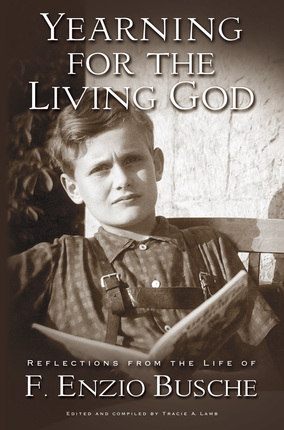
And do one or more of the following, being ready to share it in class:
• Using chapter 2, “A Terrible Time to Grow Up” compare Satan’s tactics with Hitler’s tactics. Create a mind map, an essay, a poem, a list of as many points as you can.
• F. Enzio Busche tells us what it was like growing up under Hitler’s reign. Why do you think the German people didn’t know what was going on? What advantages do we have in America to help us avoid being so deceived? Are we still sometimes deceived by leaders? How can we find the truth and know who to trust? What can we use as our measuring sticks? Discuss, ponder, and/or record your answers to these questions and be ready to present them to the class.
• Choose one chapter (for example, chapter 8, “The Chapel Miracle”) and review it, making a list of all the miracles you can find. Which of the miracles touched your heart and boosted your faith the most? Record what those miracles mean to you, how it boosts your faith for miracles to happen in your own life, and what is your plan of action to be more receptive to miracles and personal revelation like Busche was? Be ready to share with the class.
• What were your favorite parts of Busche’s story? Why? If God can do great things for him, what can He do for you when you commit to do whatever He asks of you? What are keys you noticed in the story of being worthy and ready to receive God’s miracles, blessings, personal revelation, and even angels? Be ready to share your favorite parts and those keys with the class.
• Choose your own inspirement to help you “swallow” your reading. Approve it with your parent or Sister Edwards first.
Subscribe to:
Posts (Atom)