Saturday, October 12, 2013

November Apprentice Readings and Inspirements


Theme: Life and the Pursuit of Happiness

 
Scripture to Memorize this Week: 

Mosiah 4:30:  “But this much I can tell you, that if ye do not watch yourselves, and your thoughts, and your words, and your deeds, and observe the commandments of God, and continue in the faith of what ye have heard concerning the coming of our Lord, even unto the end of your lives, ye must perish. And now, O man, remember, and perish not.”


Apprentice


Weekly Habits
-SAR or other time planning tool. Discuss your studies with your parents in a weekly meeting. 
-Read a poem a day  to "Lexington" (p. 75)
-Memorize the scripture this week: Mosiah 4:30
-Summary sheet to hand in 


Study (Know)
Read/watch all of the following to increase your knowledge:

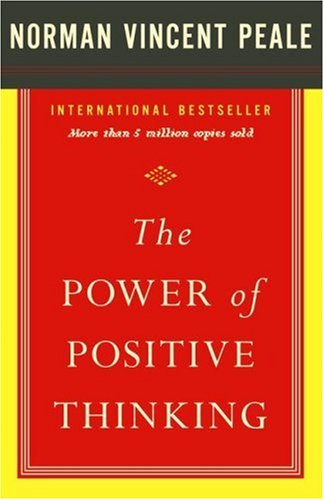
1. Read The Power of Positive Thinking for Teens

We hope you’ll read this book at the beginning of your study week, because we want you to have plenty of time to practice these principles that have the power to change your life!  If you own the book, mark your favorite parts, and circle your favorite quotes. 

If you don't have the teen version, here is a free version of the original book. Note: Since this original book is longer than the teen version, if you need to skip study numbers 4, 5, and 6 (below) then you can. We'd prefer you do them all of course! 


2. As you read the book, make a brainstorming list of ideas of how a person can become more faithful and positive in thoughts and words. This list doesn't mean you have to use all the ideas; it's just a brainstorm.    

3. Watch or read this talk by Elder Holland called "The Tongue of Angels."  Take notes as you watch it, or highlight as you read it. At the end, write a summary of the main points in the talk. 


4. Find and watch/read one more talk or article that backs up the principles in the book. You could do a search on LDS.org using words like attitude, gratitude, words, faith, charity, pray, optimism, etc. Take notes as you watch the talk, or highlight if you're reading it. At the end, write a summary of the main points of the talk.   

5. Find 5 additional scriptures and 5 additional quotes that back up the principles in this book. Record them in your notebook. 

6. Do a word study on a word that you found interesting during your study this week.

Teach (Understand)

1. After doing the above five "Study" items, find a quiet place to ponder. Write for 30+ minutes on what you think and feel about these principles. What difference do you think it could make in your life if you change your habitual thoughts and words to be more filled with faith, gratitude, and positivity?  What are you willing to do to make that change? How much time and effort do you think it will take? Is it worth it to you?  

AND choose one or more of the following inspirements:  
  • Create your own “game plan” of how to become more positive and faithful in your thoughts and words.  The following inspirements are ideas you could include in your game plan, or create your own ideas. Use your “game plan” for a full day, or longer would be better.  If you need reminding, you could post signs around the house, tell your family what you’re doing, or use a timer or alarms.  Record and come ready to teach the class what you did and what you noticed. 


  • Write a list of positive statements either from this book, or make up your own. Post them in a place where you’ll see it at least twice a day, like where you eat meals or brush your teeth.  This week each time you see the list, say these (ideally aloud). Focus on feeling them as you say each one.  Did this habit start to change your mood or your outlook on life? Come prepared to teach us what you did and what you noticed. 
  • Find a place to quietly ponder.  Prayerfully write a list of things and people for whom you are praying, as well as things for which you are grateful.  Each time you pray, use this list to remind you to make your prayers more meaningful, powerful, and more connecting to Heavenly Father. 
  • In a quiet place, ponder and make a two-column list.  On the left, list the things you’re stressed or sad about in your life, or the negative thoughts you think most often. On the right, create a positive/faithful statement about each of those things. For example, “I feel lonely” could turn into “I am reaching out to others in friendly ways.” “I don’t have enough time” could turn into “God is helping me be a wise steward of the time He gives me. I am focused, efficient, and productive.”  Then post this list in a place where you can read the positive side twice each day. What have you noticed after doing this for a while? 


  • Once a day for a week, say a five-minute prayer that is only gratitude. Record how this changes your attitude. 


  • Give more than you get. For one full day choose to focus only on giving, and not on getting. Record what you did and how you felt. 
  • Write the list of power prayer tools on page 40-41. Use them in every prayer this week. Record what you did and how it affected your attitude as well as your relationship with God. 
  • For one full day, be very watchful of your own thoughts.  What percentage would you guess of your thoughts are negative and positive?  For a full day, every time you notice yourself have a negative thought about a thing or person or event, stop for a moment, and think or say three positive things about that thing or person or event. Do this each time you notice a negative thought throughout the day. At the end of the day, record your experience and your thoughts about it. 
  • Watch the video below about how to create a vision board.  Then create your own vision board. Stand in front of it twice a day and visualize/feel that you’ve achieved those goals. Some people use vision boards for worldly goals, but you can also use them to help with higher goals like attaining Christlike qualities, eating healthy, exercising, service, education, saving money for an LDS mission, being a George Washington-type leader, having a happy and close family, an organized desk or room, studying scriptures or journaling, achieving goals in Scouting or Personal Progress, and so on. 


Serve (Become)
Choose ONE of the following inspirements:


  • Record what you did in the Teach inspirement(s). Come to class ready to share what you did and how it affected you.  Habits like these are powerful only if you keep working on them.  How are you going to keep working on what you’ve been doing?
  • Or choose a Serve inspirement from apprentice or master level.


November Journeyman Readings and Inspirements


Study (Know)

Read all of the following to increase your knowledge:

  • How: Essential Skills for Living the Gospel. Say a prayer to be guided as you choose one chapter. Read that chapter, marking your favorite parts as you read.  Write down a goal of how you’ll practice this skill for the next 4 weeks.  Post the goal in a place you see often, including adding it to your SAR. Tell a parent about your goal. 


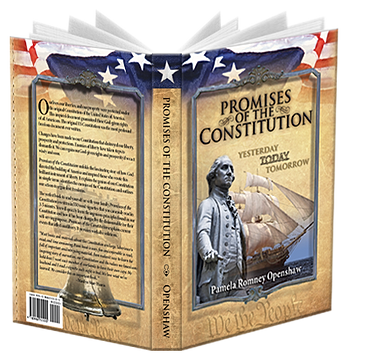
  • Promises of the Constitution: Yesterday, Today, Tomorrow. Read pages 173-199. Mark anything that stands out to you.  Discuss any questions you have about the readings with a parent. (Hint: I recommend you read this toward the end of your study week.)


  • Hero Study. Research a person you admire from the time period of 1500 to 1850. Take notes about your hero and hand in your notes. At the bottom of the page, list the heroic qualities you admire about your hero, and choose one you want to develop that in yourself.


Teach (Understand)
Choose ONE of the following inspirements:  

  • Prayerfully create your own inspirement to help you get the most out of what you studied. (See a list of ideas on the back of the newsletter.) Come ready to teach us.
  • Teach the Vanguard group the skill you chose to learn from the "How” book. Include how you’re applying that skill in your life. You could teach this in a variety of ways: create a poem or song, Prezi or Power Point, white board discussion, object lesson, poster board that displays the main points, prepare a talk, or write a paper about it to read to the class.  Limit your presentation to 2-3 minutes. 
  • Write a hero report.  Read the report to the class. Hand in your report to Sister Edwards or Cloward.  It won't be graded; we just want to read it. If you'd like to become a better writer, you can write at the top "feedback please." Be sure to include the qualities you most admire about your hero, and your plan to become more of those qualities. 
  • If you signed up for this week, give your hero presentation. See instructions on the Yahoo group files. Be sure to include the qualities you most admire about your hero, and your plan to become more of those qualities. 
  • When reading Promises of the Constitution, write a summary at the end of each tiny chapter.  Take one or more of those main concepts and choose a way to teach it to the class. You can use a Prezi or Power Point presentation, white board discussion, object lesson, short game or activity or simulation, or find a video online to help you teach the concept. 
  • Answer the following questions from Promises of the Constitution in your notebook: 
  1. In the original Constitution which was the only branch of government authorized to create laws?  Is that the way it is today? 
  2. In what year were several amendments added to the Constitution that changed the structure of power and money in our national government? 
  3. Explain the before and after of the 17th Amendment.  What negative side effects has it caused? 
  4. Explain the before and after of the 16th Amendment. 
  5. Before 1913 Congress coined and regulated money. To whom did they give that power? What things happened because of that change? 


Serve (Become)
Choose ONE of the following inspirements :
  • Write down promptings you receive while doing your readings and inspirements. Act on one that serves someone else. Come to class ready to share.  
  • Practice the skill you chose from the “How” book for 24 hours.  If it will help you remember, set alarms on a phone or watch or use a timer to remind you to practice your skill.  
  • What heroic qualities did you most admire about the hero you studied? For 24 hours do your best to act out that quality. Record what you did. For example, if the heroic quality you admire is courage, write down ways you were courageous in your day, like “I had the courage to try a new dinner my mom made. I had courage to call and make an appointment for myself, to do my chores without being reminded, and to speak calmly to my sister when she was mad and I was tempted to yell. I was tempted to tell a lie but I had the courage to tell the truth.” 


  • What does your learning make you want to do or change in yourself? Act on that for a day. Record what you did. 
  • Or choose a Serve inspirement from journeyman or master level.


Monday, September 16, 2013

Instructions for a Hero Study, Report, or Presentation

Hero Study 

Remember, the main point of studying a hero is to find the heroic qualities you admire about them and apply those qualities to your own life! 

Choose a person you admire from the time period we’re studying (approximately 1500 to 1850). Research and take notes on that person. This could include a founding father or mother, an inventor, musician, religious leader, author, ancestor, or someone else you admire and want to learn more about. Use a book from our recommended hero book list, or find other sources with the approval of your parents. 

(Note: Wikipedia is not allowed. Copying and pasting is not allowed. This needs to be in your own words.)  

Here are some ideas of thing you could include in your notes: 

• your hero’s life and experiences
• how you think they filled the mission God sent them to live
• how their hard work
• education
• talents
• life challenges helped them become a better person and do something worthwhile
• how you can see God's hand in his or her life
• what Christlike characteristics that person had that you admire 

Hero Report

From the notes you wrote about your hero, type up a report. See Sister Edwards' example for ideas.  Read the report to the class.  

Hand in your report so we can see that you did it. It won't be graded or anything. If you'd like to become a better writer, you can write at the top "Feedback please." 

Hero Presentation

If it's your week to present your hero report (you'll sign up for a turn), have fun with it!  After researching your hero and taking notes, find some fun ways to present your hero to us!  Although most inspirements are about 2-3 minutes, a hero report is meant to be 5-10 minutes, so stretch yourself and make it great!   


Here are some ideas: 

  • Dress up as your hero and read us your hero report
  • Show pictures of your hero and some of the things he or she did to make the world a better place 
  • Perform part of a speech your hero gave, or play part of a musical composition he or she wrote
  • Show us a short video clip about your hero as part of your presentation
  • Create a skit that portrays your hero’s characteristics and what he or she accomplished 
  • Write a poem about your hero 
  • A short game to help you teach the class interesting things about your hero
  • Be sure to include what characteristics you admire about your hero, and your plan to develop one of those characteristics.


Scripture to Memorize by October 2, 2013

Alma 31:5

"And now, as the preaching of the word had a great tendency to lead the people to do that which was just -- yea, it had had more powerful affect upon the minds of the people than the sword, or anything else, which had happened unto them -- therefore Alma thought it was expedient that they should try the virtue of the word of God."


Apprentice Readings & Inspirements

October Theme: 

Citizenship, Christian Principle of Self-government


Study  – Know

1. Before you begin:  Plan your studies for the week and discuss it with your parent(s).
Use a SAR (Student Accountability Report) or another planner-type tool.  Discuss your plans and progress with your parents in your weekly parent mentor meeting. (Estimated time: 30 minutes)

2. Read a poem a day (from Sister Bates) in American History in Verse. Read the poems to “________”.  (Estimated time: 30 minutes)

3. Read Carry On, Mr. Bowditch. If you own the book, mark it up. Highlight things that stand out to you. Make notes in the margins. Circle your favorite quotes.


4. Word Study. Do a word study on ONE of the following words: citizenship, society, community. (Estimated time: 30 minutes)

Teach – Understand

Choose ONE of the following inspirements: (Estimated time: 30 minutes or more)


  • Research a navigational skill from the book, and come to class with a diagram or model and be prepared to teach us how to do it. Some examples are: using a sextant to “shoot the sun,” telling time by the Big Dipper, or keeping a log.
  • Choose one of the following quotes from the book. (Page numbers are approximate as they may be slightly off depending on what copy you have.)

- “Being happy takes a lot of practice, don't you think?” (pg. 73)
- “Sometimes, if you look at the stars long enough, they sort of shrink your troubles down to size.” (pg. 86)
- “We can't have freedom – unless we have freedom.” (pg. 90)
- “It did things to a man, Nat thought, to find out he had a brain.” (pg. 139)
- “The best way to stay at peace is to be prepared for war.” (pg. 170)
Reread the part of the story that includes the quote. Write a few paragraphs on what you think that quote means and if you agree or disagree with it. Be prepared to share your thoughts in class.

  • Do a character T chart on Nat Bowditch using quotes from your reading. Choose one of the qualities that he had that you would like to develop in yourself. Do a word study on that quality and include a paragraph on how you can build that quality in yourself.
  • Study the types of boats they had in the late 1700's and make a physical representation on one of them (drawing, sculpture, model, etc) and then come to class and teach us about the parts of the boat that we learned about in this book.
  • Do a skit or make a movie to show the class your favorite part of the book.


Serve –Become

Choose ONE of the following inspirements : (Estimated time: 30 minutes or more)

  • President Gordon B. Hinckley said he was fascinated by the North Star. Regardless of the earth’s rotation, the North Star maintained its position in the heavens and never moved. He said: “I recognized it as a constant in the midst of change. It was something that could always be counted on, something that was dependable, an anchor in what otherwise appeared to be a moving and unstable firmament.” (Sheri L. Dew, Go Forward with Faith: The Biography of Gordon B. Hinckley (1996), 5–6)
Noting the unwavering, absolute position of the North Star, one writer told the contrasting story of a young boy who became lost on a camping trip. When his father finally found him, his father asked if he had remembered to pick out something in the landscape that he could always see. This, his father said, would have helped him to fix a steady position. The boy said, “I did.”“What was it?” the father asked. “That rabbit over there,” the boy said.  Think about what the navigation stars are in your life.  What things in your life do you use to measure truth?  Which of the things that you use to measure truth truly provide you with truth and which things don't?   Spend some time thinking about this and decide on something you could do better on in your life and work on it this week.

  • It takes Nat several years to learn Latin well enough to read “Principia”. Have you ever spent a year or more working on or towards something? Why did you spend that much time? Was it worth it? What did you learn from the experience? Write your thoughts down and be prepared to share in class.  If you have never spent that long working on something, think hard about something you would like to learn or do that might take that long and set a goal to accomplish it.  Be prepared to share your plan with the class.

October Journeyman Readings & Inspirements

Study  – Know

Read ALL of the following: 

1. How: Essential Skills for Living the Gospel. Say a prayer and then choose one of the chapters to read.  Read that chapter, marking your favorite parts as you read.  In your journal make note of any spiritual promptings you receive while you read so you can act on those.  (Estimated time: 30 minutes)


2. Promises of the Constitution: Yesterday, Today, Tomorrow. Read pages 125-157. Mark anything that stands out to you. (Estimated time: 2 hours)


3. Hero Study. Research and take notes on a person you admire from this time period (1500 to 1850). (Estimated time: 1 hour)


Teach – Understand

Choose ONE of the following inspirements: (Estimated time: 30 minutes or more)


  • Teach the Vanguard group the skill you chose to learn from the "How book."  Strive to work on this new habit all four weeks until the next Leadership Academy class, by writing it on your SAR and discussing it with your parents. You could teach this in a variety of ways: create a poem or song, Prezi or Power Point , white board discussion, object lesson, poster board that displays the main points, prepare a talk, or write a paper about it to read to the class. Limit your presentation to 2-3 minutes. 
  • Write a hero report.  Read the report to the class. Hand in your report to Sister Edwards.  It won't be graded; we just want to read it. If you'd like to become a better writer, you can write at the top "feedback please."
  • If you signed up for this week, give your hero presentation. See instructions on the Yahoo group files. 
  • When reading Promises of the Constitution, write a summary at the end of each tiny chapter.  Take one of those main concepts and choose a way to teach it to the class. You can use a Prezi or Power Point presentation, white board discussion, object lesson, short game or activity or simulation, or find a video online to help you teach the concept.
  • Answer the following questions from Promises of the Constitution in your notebook: 

- What ways are people are supposed to be equal and ways they aren’t (pages 150-51).  
- Draw a diagram of government’s horizontal powers and vertical powers (pages 148-9).
- Explain the what, why, and who of the Federalist Papers (pages 126-7). 
- List the rights God has given us on pages 142-3. 

Serve –Become

Choose ONE of the following inspirements : (Estimated time: 30 minutes or more)


  • Teach a family home evening lesson on one of the things you studied this month: your skill from the “How book,” a government principle from the Promises of the Constitution book, your hero, or Carry On Mr. Bowditch. 
  • Write down promptings you receive while doing your readings and inspirements. Act on one that serves someone else. Come to class ready to share. 
  • Teach a family member or friend the main points of the things you've learned from your studies this week. Be sure to tell them how you're going to improve your life from the things you've learned. Come to class ready to share. 
  • Or choose a “Serve-Become” from the apprentice or master level.
  • Find three scriptures and three quotes that relate to something you learned this week. Write a summary of them in your notebook. What is God teaching you from these? Record your thoughts. 


Tuesday, September 3, 2013

Remember to memorize the scripture for this month!

It goes along with our 2013-24 theme of "Joy in the Journey!" We'll be passing it off at Leadership Academy class on September 4, 2013.


John 16:33 --  "These things I have spoken unto you, that in me ye might have peace. In the world ye shall have tribulation: but be of good cheer; I have overcome the world."